
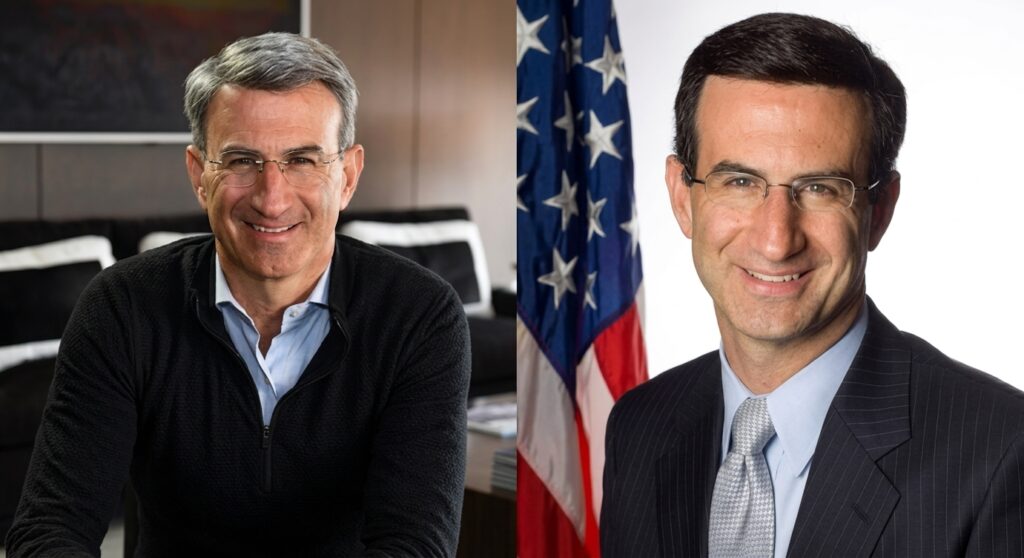

Peter orszag wig Orszag served as director of the Congressional Budget Office (CBO) and later as director of the Office of Management and Budget (OMB) during President Barack Obama’s administration. He also worked in the Clinton administration and held academic and policy research positions.
His education includes Princeton University and the London School of Economics, where he completed doctoral studies. These achievements, rather than his hairstyle, form the foundation of his public professional profile.
Peter Orszag’s biography at a glance
|
Detail |
Verified or reported information |
|---|---|
|
Full name |
Peter Richard Orszag |
|
Profession |
Economist and financial executive |
|
Current leadership role |
CEO and Chairman of Lazard |
|
CEO appointment |
October 2023 |
|
Chairman role |
January 2025 |
|
Former government position |
Director of the Office of Management and Budget |
|
Earlier government position |
Director of the Congressional Budget Office |
|
Education |
Princeton University and the London School of Economics |
|
Spouse |
Bianna Golodryga, journalist and CNN correspondent |
|
Known for |
Economic policy, public service, and financial leadership |
|
Wig or toupee claim |
Not publicly confirmed by reliable evidence |
For professional details, consult Lazard’s official biography of Peter Orszag.
Does Peter Orszag Wear a Wig?
The most accurate answer to the Peter Orszag wig question is that there is no reliable public confirmation that he wears a wig, toupee, or other hairpiece.
The distinction between an unverified rumor and a documented fact matters. Public photographs show how someone’s hair looks at a particular moment, but they cannot reliably establish whether the person uses a hairpiece, has undergone a transplant, or simply styles their hair in a particular way.
Orszag’s official professional biographies focus on his work in economics, government, and finance. They do not confirm hair replacement or a cosmetic procedure. That absence does not prove that his hair is natural; it means the claim remains unverified.
A responsible article should therefore avoid statements such as “Peter Orszag definitely wears a wig” or “Peter Orszag has never used a hairpiece.” Neither conclusion is established by the available public evidence.
Where Did the Peter Orszag Wig Rumor Start?
One important historical source is a January 26, 2010, article in The New York Observer titled “The Toupee Titan of New York.” The article profiled hairpiece specialist Joseph Paris and included comments about Orszag’s hairstyle after the journalist showed Paris photographs of him. Read the original article.
The crucial detail is that Paris had not personally examined Orszag’s hair or measured his scalp. His comments were based on photographs, so the article documents historical speculation rather than proof that Orszag wore a toupee.
Over time, online discussions and search queries have continued to revisit the subject. The result is a recurring question about his appearance, even though the public evidence does not establish a definitive answer.
This example shows how a speculative comment can outlive its original context. When later articles repeat the claim without explaining its source, readers may mistakenly assume that the rumor has been confirmed.
What Makes His Hairstyle Noticeable?
People may notice a public figure’s hair because of its shape, volume, color, or consistency across photographs. Orszag has appeared in professional portraits, television interviews, public events, and news coverage over many years.
However, appearance varies for several ordinary reasons:
-
Hair styling: A carefully arranged cut can make the hair look fuller or more uniform.
-
Lighting: Studio lights and direct sunlight affect the appearance of hair color and density.
-
Camera angle: A photograph taken from above or below can change how the hairline looks.
-
Hair length: Different lengths can make the scalp more or less visible.
-
Image quality: Older photographs, compression, and retouching can affect visible detail.
-
Natural aging: Hair color and density can change over time.
These factors offer possible explanations for differences between images, but they do not establish what Orszag’s hair looks like without styling or whether he uses any particular product or treatment.
The important point is simple: a hairstyle can attract attention without proving anything about a person’s grooming choices.
Wig, Toupee, Hair System, and Hair Transplant: What Is the Difference?
Online discussions often use the terms “wig,” “toupee,” and “hair system” as though they mean the same thing. They are related, but they describe different approaches.
|
Term |
What it generally means |
Does it prove anything about Orszag? |
|---|---|---|
|
Wig |
A covering that generally sits over much or all of the scalp |
No |
|
Toupee |
A partial hairpiece designed to cover an area of thinning or hair loss |
No |
|
Hair system |
A broad term for non-surgical hair replacement products and methods |
No |
|
Hair transplant |
A medical procedure that moves hair follicles from one area to another |
No |
|
Hair styling |
Cutting, shaping, drying, or arranging existing hair |
No |
|
Hair fibers or concealers |
Cosmetic products that can make hair appear denser |
No |
The table explains general terminology; it does not identify which, if any, of these methods Orszag uses.
A hair transplant is also different from a wig or toupee because it involves a medical procedure rather than attaching a hairpiece. Claims about such procedures require evidence, not just comparisons between photographs.
Can Photographs Prove Someone Is Wearing a Hairpiece?
No. Photographs alone are not a reliable way to determine whether someone wears a wig or toupee.
A single image may show a sharply defined hairline or dense-looking hair, but those features are not conclusive. Lighting, styling, camera resolution, and image editing can all affect what viewers see.
Even comparing photographs taken years apart has limitations. Changes may reflect age, grooming, lighting, or photography rather than a medical or cosmetic procedure.
For the Peter Orszag wig discussion, the strongest approach is to separate three kinds of information:
-
Observable evidence: What a photograph actually shows, such as hairstyle or visible hair color.
-
Reported commentary: What a named journalist or specialist said, including the context in which they said it.
-
Verified confirmation: Reliable evidence that directly establishes whether a hairpiece or procedure was used.
The first two categories do not automatically provide the third. A careful writer should not turn visual interpretation into a personal claim about someone’s body.
Why Do Public Figures Face Hair Speculation?
Public figures are photographed frequently, and repeated exposure can lead people to scrutinize details that would otherwise receive little attention. Hairstyles, clothing, facial expressions, and apparent changes in appearance can become topics of online discussion.
Several factors can encourage this behavior:
-
Frequent media exposure: More photographs create more opportunities for comparison.
-
Curiosity about appearance: Readers often search for explanations for noticeable features.
-
Viral headlines: Question-based headlines can draw attention even when the answer remains uncertain.
-
Repetition across websites: One claim can be copied without new evidence.
-
Celebrity culture: Public interest in a person’s professional achievements can spill into private appearance.
In Orszag’s case, the historical Observer article helps explain why the topic became part of online discussion. It does not establish that the underlying speculation was true.
A fair article can explain the history of a rumor without endorsing it. That approach respects the reader’s curiosity while protecting factual accuracy.
Peter Orszag’s Career and Public Image
Peter Orszag’s public reputation is grounded in economic analysis, government service, and financial leadership. His work at the CBO involved budget analysis, while his OMB role placed him in a senior position within the Obama administration.
After moving into the private sector, he joined Lazard in 2016 and later led its Financial Advisory business before becoming CEO. His role expanded to include the chairmanship in 2025.
Lazard is a global financial advisory and asset management firm. Its work includes advising companies, governments, and other institutions on complex financial decisions.
These roles provide a more substantial and verifiable account of Orszag’s public life than speculation about his hair. They also offer useful context for readers who encountered his name through a search about his appearance but are unfamiliar with his career.
How to Check Claims About Peter Orszag’s Hair
If you encounter a website claiming to know whether Orszag wears a wig, use a few basic fact-checking steps before accepting the claim.
-
Look for direct evidence. Does the article cite a statement from Orszag or credible firsthand reporting?
-
Check the original source. If a story refers to an older article, read that article instead of relying on a summary.
-
Separate opinions from facts. A specialist commenting on a photograph is not the same as a specialist examining someone’s hair.
-
Compare independent reporting. Multiple websites repeating identical wording may all rely on the same original claim.
-
Check the publication date. An old article may explain the history of a rumor but not establish a current fact.
-
Watch for unsupported certainty. Headlines that promise a definitive answer may offer no evidence in the body of the article.
For this topic, the most useful source combination is Orszag’s official professional biography for career facts and the original 2010 Observer report for the history of the hair speculation. Neither confirms that he wears a hairpiece.
Frequently Asked Questions
1. Does Peter Orszag wear a wig?
There is no reliable public confirmation that Peter Orszag wears a wig, toupee, or other hairpiece. The claim should be treated as unverified.
2. Why do people search for Peter Orszag’s hair?
His hairstyle attracted media attention during his years in Washington, including a 2010 article that discussed it while profiling a hairpiece specialist. The article recorded speculation, not proof.
3. Has Peter Orszag confirmed wearing a toupee?
No reliable public confirmation has been identified in the sources used for this article. Without a direct statement or credible evidence, it would be inaccurate to claim that he wears one.
4. Can photographs prove that Peter Orszag wears a hairpiece?
No. Photographs show a hairstyle at a particular moment, but lighting, styling, camera angle, and image quality prevent them from reliably establishing whether someone wears a hairpiece.
5. What does Peter Orszag do for a living?
He is an economist and financial executive who serves as CEO and Chairman of Lazard. He previously led the Congressional Budget Office and served as director of the Office of Management and Budget.
6. Is the Peter Orszag wig rumor confirmed?
No. The rumor has a documented history in media coverage, but the available sources do not establish that he wears a wig or toupee.
Conclusion
The Peter Orszag wig question has attracted attention because of historical media commentary and public curiosity about his hairstyle. However, there is no reliable public confirmation that he wears a wig, toupee, or other hairpiece. Photographs and speculation cannot establish that claim as fact.
For readers, the most useful takeaway is to distinguish the history of a rumor from evidence that proves it. For publishers, the best approach is to provide context, cite the original reporting, and avoid presenting unsupported personal claims as established truth.
If you are researching Peter Orszag, start with his official Lazard biography for verified professional details and consult the original Observer report to understand the historical discussion. Clear sourcing and careful wording make an article more trustworthy and useful to readers.