
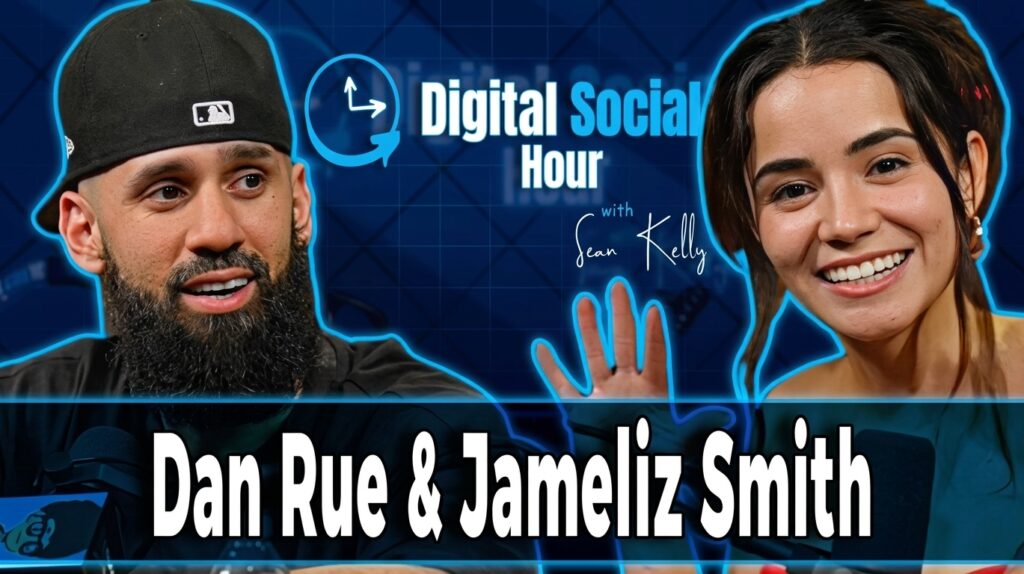

Jameliz smith A person may attract attention through social-media posts, creator activity, viral content, collaborations, entertainment appearances, or discussions across different online communities.
Search visibility itself does not prove celebrity status, professional achievements, or any particular biography. It simply means that web users are searching for information connected with that name.
Common reasons a creator or public personality gains search visibility include:
- Viral social-media posts
- Short-form video content
- Audience growth
- Creator collaborations
- Trending discussions
- Public appearances
- Fan communities
- Cross-platform activity
- News or entertainment coverage
For jameliz smith, separating search popularity from verified biography is particularly important when reliable primary information is scarce.
What Is Known About Her Public Profile?
The safest approach is to discuss only information that can be supported by credible public evidence.
Online profiles can change quickly. Usernames may be changed, accounts may be deleted, and unofficial pages can copy names or photographs.
That makes older articles especially difficult to rely on without checking their original sources.
A useful profile should answer three basic questions:
- Who published the information?
- When was it published?
- Can the claim be verified independently?
If the answer to all three questions is unclear, the information should not be presented as established fact.
How Does Social Media Shape Her Visibility?
Social media gives creators direct access to audiences without requiring traditional media distribution.
Platforms such as TikTok, Instagram, YouTube, and X can help people publish content, communicate with followers, and develop recognizable personal brands.
For a name such as jameliz smith, social platforms may also explain why information appears across different websites. A single post can be reposted, discussed, quoted, or embedded on multiple pages.
However, repetition does not turn an unverified claim into a verified fact.
Social media can help a creator:
- Build an audience
- Share short-form content
- Develop a recognizable identity
- Communicate directly with followers
- Promote projects
- Collaborate with other creators
- Generate commercial opportunities
- Establish a long-term digital presence
The quality of the audience and the authenticity of the account matter more than raw follower numbers.
Which Platforms Matter Most for Creators?
Different platforms serve different purposes.
TikTok focuses heavily on short-form discovery and viral distribution. Instagram combines visual posts, short videos, Stories, messaging, and community interaction. YouTube supports longer videos as well as short-form content.
A creator may use several platforms at once.
Typical platform roles
| Platform | Main Strength | Creator Opportunity |
|---|---|---|
| TikTok | Short-form discovery | Rapid audience growth |
| Visual identity | Community and brand building | |
| YouTube | Video library | Long-term content discovery |
| X | Public conversation | News, discussion, and community |
| Snapchat | Direct visual communication | Personal audience engagement |
| Broad audience reach | Community distribution |
The important point is that a username should always be checked on the actual platform. Search-engine results can include unofficial accounts using similar names.
Why Do Online Biographical Claims Differ?
Short answer: Online information differs because websites often rely on different sources, publication dates, and assumptions.
One article may copy another article without checking its original source. A social-media post may also become the basis for several low-quality pages.
This creates an information loop where an unsupported claim appears repeatedly.
Common examples of questionable claims include:
- Exact age without a reliable source
- Unverified birthplace
- Unsupported education history
- Estimated income presented as fact
- Unconfirmed relationship information
- Claims about family members
- Fake social-media accounts
- Invented career milestones
A strong article avoids filling information gaps simply because a reader expects a complete biography.
How Should You Verify Information About Jameliz Smith?
The best verification method starts with primary sources.
A creator’s official social account, personal website, verified interview, or direct statement carries more weight than an anonymous profile directory.
When researching jameliz smith, use the following process.
Step 1: Identify the original account
Find the social profile that appears to belong to the person.
Step 2: Check account history
An established profile with consistent activity provides more context than a newly created account.
Step 3: Compare usernames
Look for consistent usernames across platforms.
Step 4: Check external references
See whether established websites or interviews link to the same profile.
Step 5: Avoid copied claims
If multiple websites use exactly the same wording but provide no original source, treat the information cautiously.
Step 6: Check dates
Old information can become inaccurate when accounts, careers, or circumstances change.
This process produces a much cleaner research result.
What Makes a Social Media Profile Authentic?
Authenticity requires more than a familiar name or photograph.
A genuine profile may have a consistent posting history, links to other established accounts, recognizable content, and evidence of interaction with the creator’s existing community.
Useful authenticity signals include:
- Consistent username
- Long-term posting history
- Original content
- Links between established accounts
- Consistent branding
- Authentic audience interaction
- Platform verification where applicable
- References from reliable sources
None of these signals alone proves identity.
Instead, several independent signals together can provide stronger confidence.
How Can Fans Avoid Fake Accounts?
Short answer: Never assume that an account is genuine simply because it uses a familiar name or profile picture.
Impersonation can happen to creators of every size.
Fake accounts may attempt to collect followers, redirect users to external websites, request money, or obtain personal information.
Warning signs of a possible fake profile
- Recently created account
- Few original posts
- Stolen-looking photographs
- Unusual username variations
- Aggressive requests for money
- Requests for passwords
- Suspicious external links
- Claims of private access
- Poorly matched branding
- Messages demanding immediate action
When something feels inconsistent, verify it through another trusted channel.
What Should You Know About Privacy?
Privacy deserves special attention when researching a person online.
A public profile does not mean every detail about that person is public information. Responsible content should avoid exposing private addresses, private phone numbers, personal documents, private communications, or other sensitive information.
This principle applies when researching jameliz smith as well.
Responsible readers should:
- Use public information responsibly.
- Avoid sharing private contact details.
- Avoid publishing personal addresses.
- Do not circulate private photographs.
- Do not attempt to identify private individuals.
- Verify claims before reposting them.
- Respect platform privacy settings.
Good research provides useful information without crossing personal boundaries.
How Do Creators Build an Online Brand?
An online brand develops through consistency.
Creators often combine a recognizable personality, visual style, recurring subjects, community interaction, and regular publishing. Over time, these elements can make an account easier for audiences to recognize.
A successful creator strategy often includes:
- A clear audience
- Consistent content
- A recognizable identity
- Reliable publishing habits
- Community engagement
- Cross-platform distribution
- Original ideas
- Strong privacy and security practices
This framework applies broadly across the creator economy.
It also explains why a public personality can become recognizable even without traditional television, film, or newspaper coverage.
Why Do Search Trends Change Over Time?
Search interest is dynamic.
A creator’s name may suddenly receive more searches after a viral post, collaboration, controversy, interview, appearance, or widely shared video.
Search volume can then decline once the original event receives less attention.
This means a high number of searches does not automatically represent long-term popularity. It can reflect a short-lived event.
For jameliz smith, current search interest should therefore be interpreted alongside the date, source quality, and context of the information being searched.
How Can Search Engines Improve Discovery?
Search engines work best when content gives users clear, useful answers.
Google’s Search Essentials emphasizes helpful, reliable, people-first content and advises publishers to create pages that provide genuine value rather than content designed mainly to manipulate rankings.
That principle matters for name-based searches.
Instead of repeating jameliz smith throughout an article, a useful page should answer questions readers actually have:
- Who is the person?
- What is publicly verified?
- Which accounts are authentic?
- Why is the name trending?
- What claims remain unconfirmed?
- Where can readers find reliable information?
This creates stronger topical usefulness than keyword repetition.
What Information Should a Biography Include?
A high-quality biography should prioritize facts that genuinely help readers understand the subject.
Useful biography elements include:
- Public professional identity
- Confirmed career information
- Publicly documented achievements
- Official social channels
- Relevant interviews
- Professional projects
- Public statements
- Reliable dates
It should avoid sensational details that have no reliable evidence.
This is especially important for emerging creators, because online biographies can develop from rumors before trustworthy sources publish accurate information.
Complete Jameliz Smith Information Table
| Information Area | What Readers Should Look For | Reliability Standard |
|---|---|---|
| Full name | Confirmed public identity | Primary source preferred |
| Career | Documented professional activity | Official or reputable source |
| Social accounts | Creator-controlled profiles | Direct account verification |
| Age | Publicly confirmed information | Reliable biography/interview |
| Birthplace | Direct or reputable source | Cross-check required |
| Education | Publicly documented details | Avoid unsupported claims |
| Income | Official disclosure or reliable records | Estimates should be labeled |
| Net worth | Verified financial information | Treat online estimates cautiously |
| Relationships | Publicly confirmed statements | Avoid speculation |
| Family | Publicly disclosed information | Respect privacy |
| Achievements | Documented accomplishments | Independent verification |
| Viral moments | Original posts or reputable reporting | Check context |
| Current activity | Recent official updates | Check publication date |
| Authenticity | Multiple independent signals | Do not rely on one clue |
How Should You Evaluate Online Claims?
A simple source-quality system can make online research much easier.
Tier 1: Primary sources
These include:
- Official websites
- Official social accounts
- Direct interviews
- Public statements
- Official company or event pages
These sources generally provide the strongest evidence for identity and current activity.
Tier 2: Established publications
Professional journalism and reputable industry publications can provide useful independent reporting.
Tier 3: Aggregator websites
Directories and biography websites may help with discovery, but readers should check their original sources.
Tier 4: Anonymous posts
Anonymous forums, repost pages, and unsourced social posts should receive the lowest level of trust.
The goal is not to distrust everything online. It is to match the confidence of a claim with the quality of its evidence.
What Makes This a People-First SEO Topic?
A name-based search should give readers clarity, not a page filled with repeated keywords.
Google’s guidance on helpful content emphasizes original value, clear expertise, and content created for people rather than primarily for search engines.
That means a strong article about jameliz smith should avoid:
- Repeating the name in every sentence
- Copying another biography
- Inventing missing facts
- Publishing unsupported rumors
- Creating dozens of thin pages
- Using misleading headlines
- Padding the article with irrelevant sections
Instead, it should provide verification guidance, source transparency, privacy awareness, and genuinely useful context.
FAQs About Jameliz Smith
1. Who is Jameliz Smith?
Short answer: Jameliz Smith is a name associated with online and social-media searches, but reliable public biographical information should be verified before being treated as fact.
2. Is Jameliz Smith a social media creator?
Short answer: The name is associated with creator-related online searches, but readers should verify specific profiles through official or creator-controlled accounts.
Do not assume that every social profile using the name belongs to the same person.
3. What is Jameliz Smith known for?
Short answer: Public search interest appears connected to online personality and social-media activity, but specific claims should be supported by reliable sources.
A good article should avoid inventing achievements that cannot be independently confirmed.
4. What is Jameliz Smith’s age?
Short answer: An exact age should not be presented as fact without reliable, current evidence.
Biography websites often repeat information without identifying the original source.
5. Does Jameliz Smith have official social media accounts?
Short answer: Readers should verify accounts directly on the relevant social platform rather than relying on third-party lists.
Look for consistent usernames, established posting history, and links from other trusted profiles.
6. Why is Jameliz Smith searched online?
Short answer: Search interest can result from social-media activity, viral posts, creator content, or discussions across online communities.
Search popularity alone does not confirm a person’s biography or professional status.
Final Takeaway
Researching jameliz smith requires a careful balance between useful information and responsible verification. A familiar name, viral post, or repeated claim does not automatically establish a fact.
The strongest approach is to prioritize primary sources, check dates, compare multiple independent signals, and clearly label information that remains uncertain. Readers should also respect privacy and avoid spreading personal claims that lack reliable evidence.
For publishers, the same principle creates better SEO content: answer the real questions, provide useful context, cite trustworthy sources, and add information that helps readers make informed decisions.